The Sustainable Urban Design Framework, developed by Nico Larco of ELEMENT-UD, is a comprehensive, integrative approach to addressing the full range of sustainability challenges in urban environments.
It is designed to simplify a complex and often fragmented field by bringing together knowledge from architecture, urban design, planning, landscape architecture, development, ecology, and related disciplines. Rather than treating sustainability as a single metric or checklist, the Framework organizes urban design considerations around clearly defined outcome goals and multiple design scales, allowing practitioners to understand how individual design decisions contribute to broader environmental, social, and economic performance.
At its core, the Framework functions as a structured matrix that links sustainability outcomes—such as livability, resilience, equity, and ecological performance—with specific urban design elements and scales, from buildings and streets to districts and regions. This organization makes the Framework both rigorous and practical: it can guide design thinking, support systematic evaluation of existing or proposed projects, and provide a common language for interdisciplinary teams and stakeholders. By clarifying relationships between goals, strategies, and physical form, the Sustainable Urban Design Framework enables more intentional, transparent, and effective urban design decisions that support long-term sustainability.

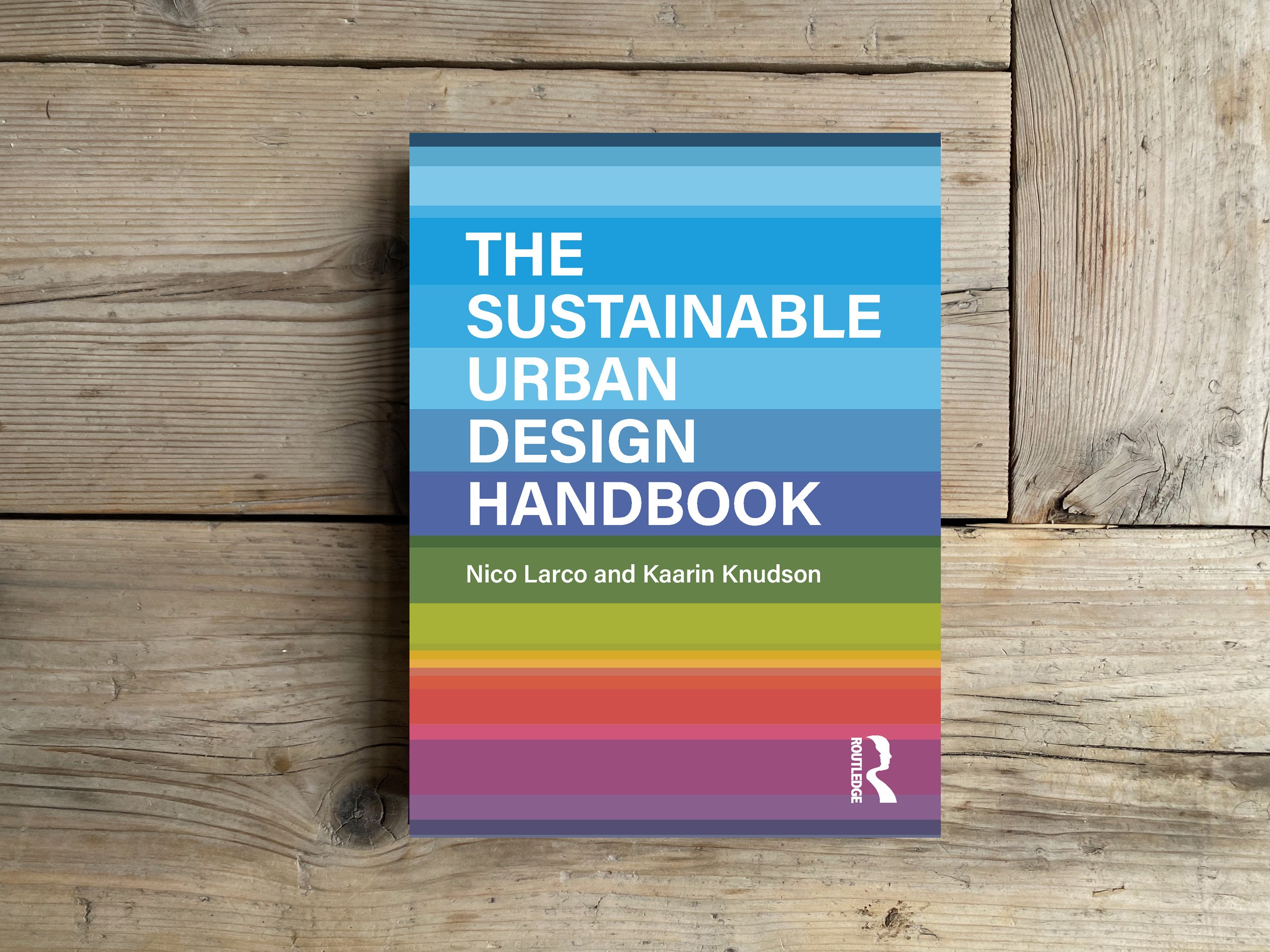
The Sustainable Urban Design Handbook
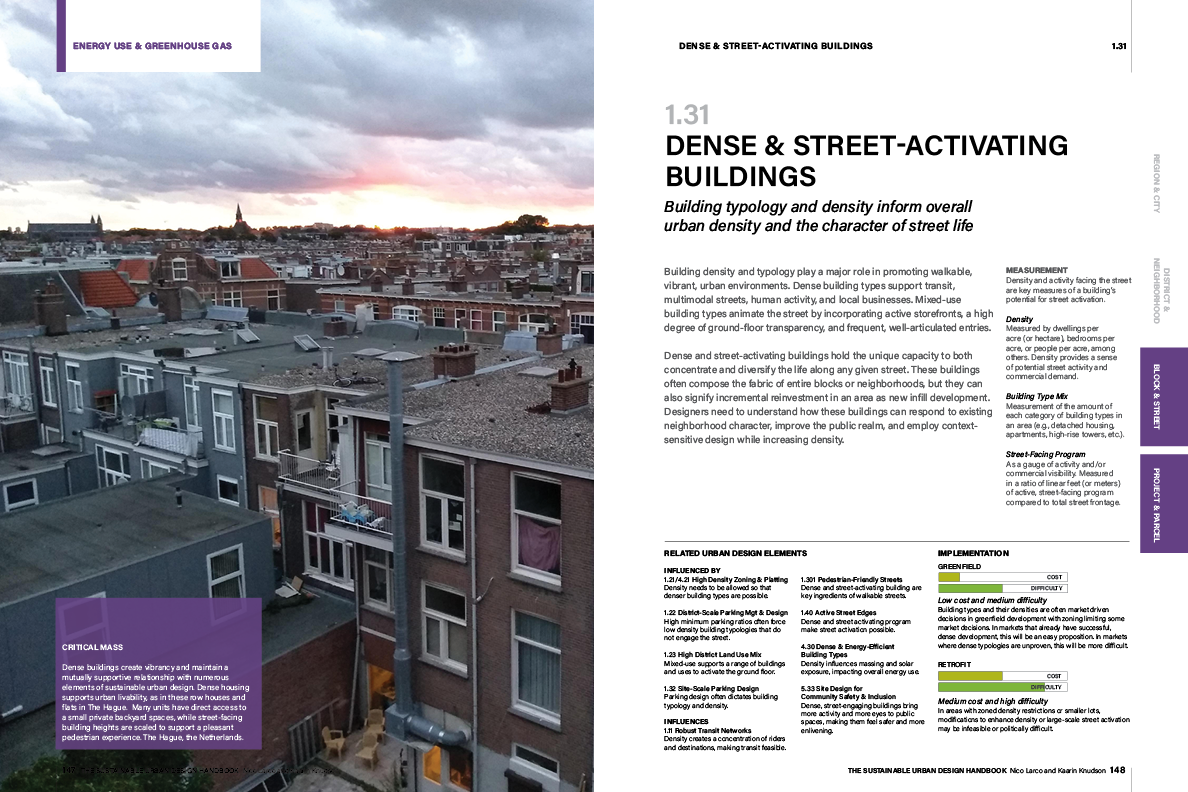
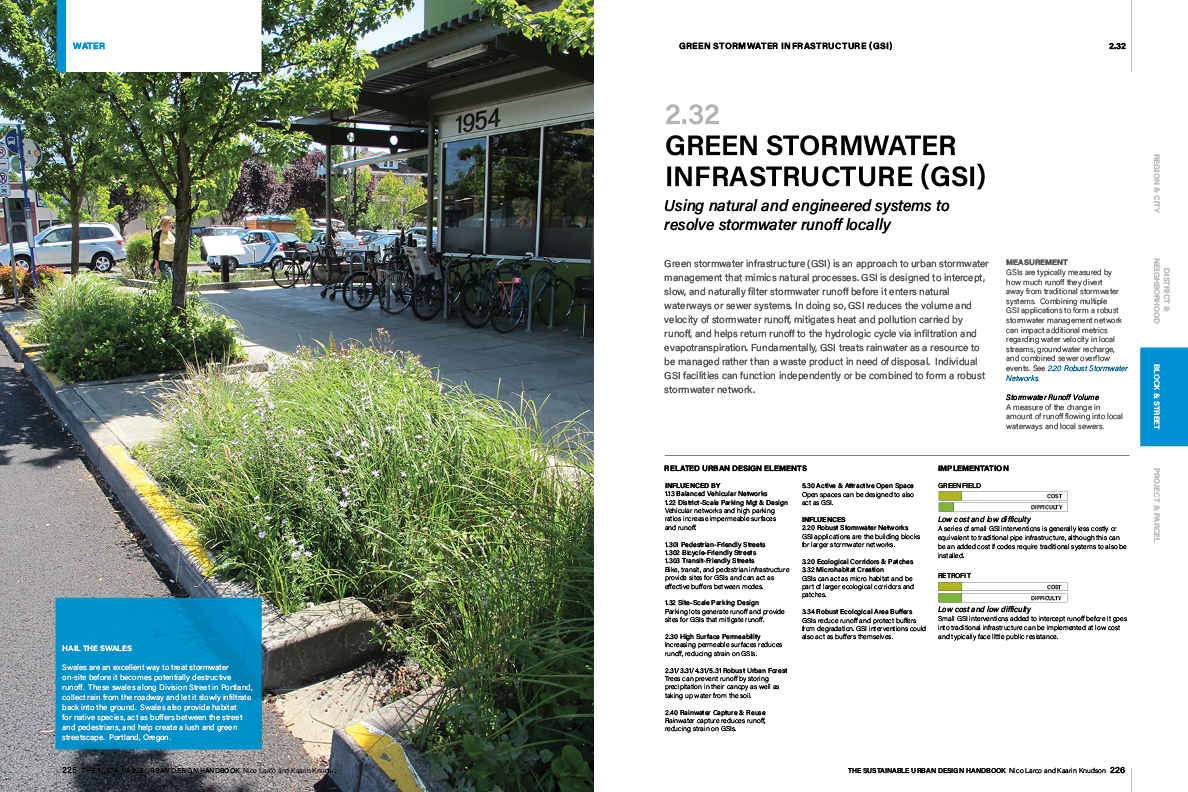
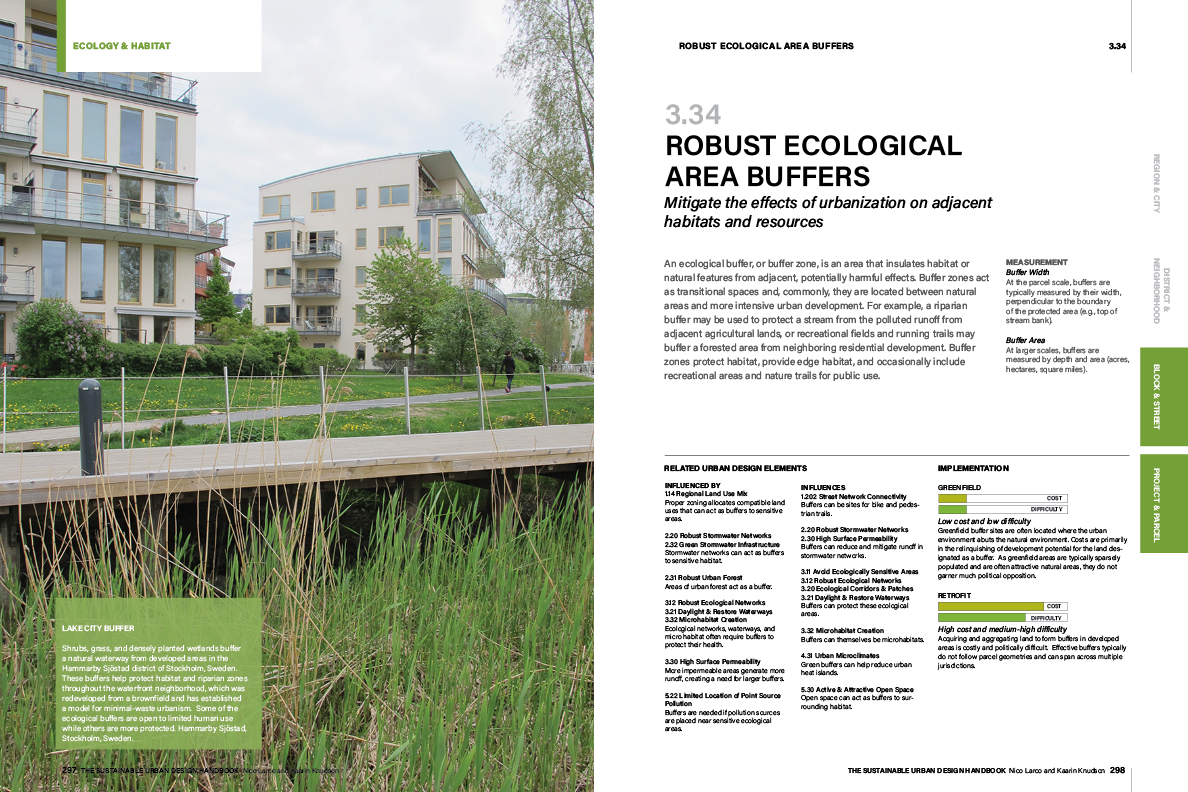
The Sustainable Urban Design Handbook translates decades of research and professional practice into a clear, accessible resource for designers, planners, and decision‑makers. Written by Nico Larco and Kaarin Knudson, the Handbook brings together the latest research, tested strategies, and real‑world examples to support more sustainable urban outcomes. It is designed to be practical and usable—equally valuable in professional practice, public-sector work, and academic settings.
Organized for clarity and ease of use, the Handbook provides concise explanations, graphic diagrams, and applied guidance that help readers understand what sustainable urban design looks like on the ground. By synthesizing best practices across disciplines and scales, it serves as both a reference and a working guide—supporting informed design decisions, performance-based evaluation, and more productive conversations about sustainability in cities.
The Sustainable Urban Design Handbook is available from Amazon (https://www.amazon.com/Sustainable-Urban-Design-Handbook/dp/1138945692) and Routledge (https://www.routledge.com/The-Sustainable-Urban-Design-Handbook/Larco-Knudson/p/book/9781138945692).
Sample chapters of the Handbook are below: